
Views: 0 Author: Site Editor Publish Time: 2026-08-24 Origin: Site
A lithium ion carries a charge of +1, and this fundamental property is what drives the lithium ion charge that powers your devices. Think of it like a magnet with a positive pole—always pulling, never neutral. This single positive charge is the engine behind every lithium ion battery you own.
You'll learn why this charge exists at the atomic level, and how the lithium ion charge flows through the 3.7v lithium battery in your pocket. By the end, you'll grasp the simple science behind your everyday devices, from smartphones to electric cars.
A lithium ion has a +1 charge because it gives up one electron to become stable.
This +1 charge pushes ions inside a battery, making the electric current that runs devices.
Understanding this simple charge helps you see how batteries work and why they are efficient.
Every atom contains three basic particles. Protons have a positive charge. Neutrons are neutral, so they have no electric pull. Electrons have a negative charge. Think of the atom like a tiny solar system. The nucleus is in the center. Protons and neutrons cluster in the nucleus. Electrons orbit in shells around the nucleus.
Lithium has an atomic number of 3. That means it has 3 protons in its nucleus. A neutral lithium atom also has 3 electrons. The positive and negative charges balance each other. The atom has no overall charge. It is in a state of electrical balance.
Property | Value |
|---|---|
Atomic Number | 3 |
6.94 |
Naturally occurring lithium has two forms called isotopes. Lithium-6 has 3 protons and 3 neutrons. Lithium-7 has 3 protons and 4 neutrons. Lithium-7 is much more common. It makes up over 92% of natural lithium. Both isotopes have 3 protons and 3 electrons in their neutral state. The balance of protons and electrons is the same in both forms.
In a neutral lithium atom, there are 3 positive protons. There are also 3 negative electrons. The atom is balanced. But this balance does not last.
Valence electrons are the electrons in the outermost shell of an atom. These electrons can form chemical bonds. They decide how an atom reacts with other atoms.
Lithium has the electron configuration 1s²2s¹. The first shell holds 2 electrons. The second shell holds 1 electron. That single outer electron is the valence electron. This electron is loosely held by the nucleus.
Atoms want stability. They want full outer shells. Helium already has this. Helium has a full first shell with 2 electrons. Lithium can reach the same state by losing its one valence electron.
Removing this electron takes energy. The first ionization energy of lithium is 520 kJ/mol.
The first ionization energy of lithium is 520 kJ/mol.
Compare this to gaining an electron. When lithium gains an electron, it releases only 59.6 kJ/mol. Lithium prefers to lose its electron. The resulting stability makes the trade worthwhile.
When lithium loses its valence electron, the atom changes. It now has 3 protons but only 2 electrons. The positive charge outweighs the negative. The result is a net charge of +1.
Lithium, with configuration 1s²2s¹, loses one electron to reach the noble-gas configuration of helium, 1s², forming Li⁺. Li⁺ and He have the same electron configurations.
This is the lithium ion charge. The atom changes from neutral lithium to a lithium ion. This ion has a net positive charge of +1. This simple fact drives battery chemistry. The atom wants to get rid of that electron. It wants to reach a stable state. This desire powers your devices.
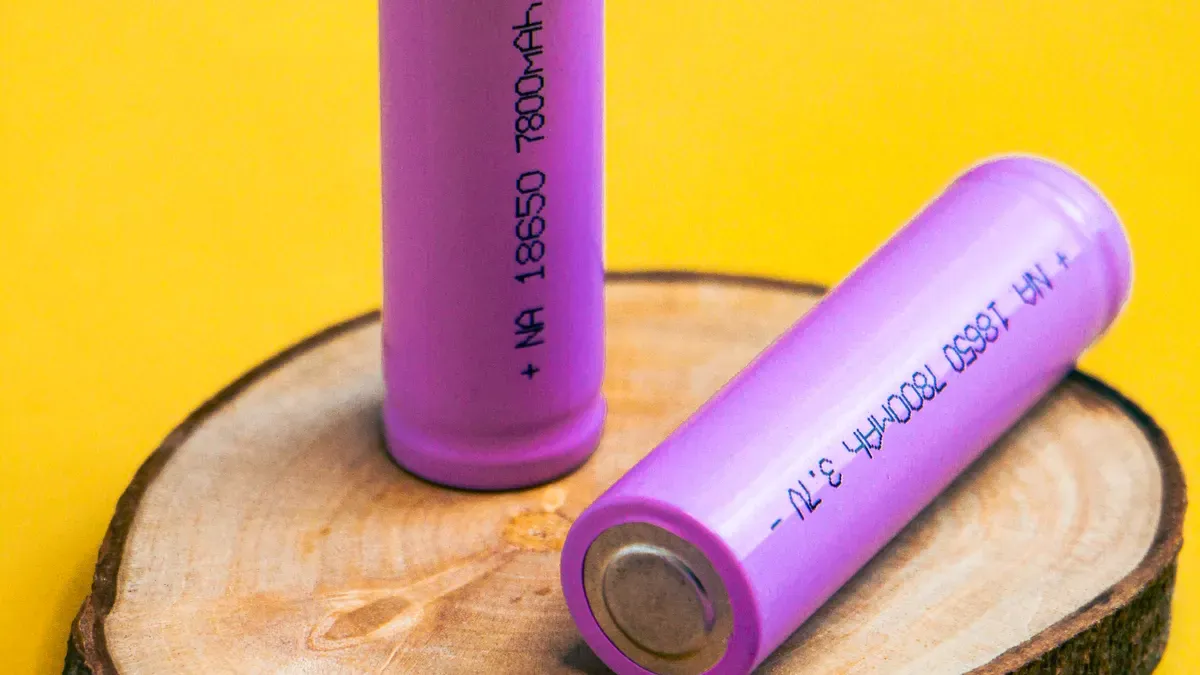
Image Source: pexels
A lithium-ion battery has three key parts. The anode is the negative electrode. The cathode is the positive electrode. The electrolyte sits between them and lets ions move. It lets lithium ions pass through but blocks electrons. Lithium salts like LiPF₆ dissolve in a liquid to make this path. The electrolyte's ability to carry ions is about 10 mS/cm at room temperature. This speed decides how fast the battery can discharge.
When you use your device, the battery starts to discharge. Lithium atoms at the anode lose electrons. This is called oxidation. The atoms become Li⁺ ions. The lithium ion charge of +1 then drives the whole process.
The electrolyte carries these positive ions from the anode to the cathode. The electrons take a different path. They travel through the outside circuit. This gives power to your device. This separation of paths is very important. The electron flow in the circuit makes the electric current your phone uses.
The anode in commercial cells is often made of graphite, silicon, or a mix of both. The cathode materials vary more. Manufacturers use lithium cobalt oxide (LCO), lithium manganese oxide (LMO), lithium iron phosphate (LFP), or lithium nickel manganese cobalt oxide (NMC). Each mix gives slightly different performance.
The voltage you see on a battery label comes from this chemical process. One cell gives a nominal voltage between 3.6V and 3.7V. The 3.7V number is often a marketing label. The actual average during discharge is closer to 3.6V. This voltage comes from the specific properties of the electrode materials.
The electron flow follows a clear order during discharge:
The anode oxidation reaction sends electrons into the outside circuit.
These electrons travel through the circuit toward the positive electrode.
The cathode reduction reaction uses these electrons.
The speed of electron release decides how much current flows through your device.
Charging reverses this whole process. An outside power source pushes electrons back toward the anode. The lithium ions travel back through the electrolyte to join them. This reverse flow puts the battery back to its ready state.
The ions slide into the graphite layers through intercalation. This process puts lithium ions between the graphite layers without breaking the structure. The framework stays intact, which helps the battery last longer. During discharge, the ions leave through deintercalation and flow back to the cathode.
This cycle repeats with very high efficiency. Li-ion batteries have Coulombic efficiency over 99%. Some cells start at 99.1% and improve to 99.5% after 15 cycles. Others start at 99.5% and reach 99.9% after 30 cycles. This means nearly every electron and ion does useful work.
The full-charge voltage for one cell is usually 4.2V. The discharge cutoff is around 3.0V. The nominal 3.7V lithium battery works within this range. Every 3.7V lithium battery you own uses this same basic chemistry.
The +1 charge drives this whole process. Without it, the ions would not move. The electrons would not flow. Your rechargeable battery would not work. This simple positive charge turns chemical energy into electrical power. It powers everything from your smartphone to your electric vehicle.
The lithium ion charge of +1 starts with a single lost electron. This positive charge moves ions from anode to cathode and back. You rely on this flow every day. The same chemistry powers your smartphone and electric vehicle. Projected global demand for li-ion batteries reaches 2,722 GWh by 2030. Your 3.7v lithium battery depends on this elegant principle. This charge makes modern portable power possible.
A lithium atom gives away one electron to become stable. After that, it has 3 protons but only 2 electrons. The extra proton gives the lithium ion its +1 charge.
One cell hits 4.2V when fully charged. The usual rating is 3.7V. Your 3.7v lithium battery works between 3.0V and 4.2V in daily use.
Most li-ion batteries can handle 300 to 500 full charges before losing noticeable capacity. One full cycle means one charge plus one discharge. Your rechargeable battery slowly wears out with each cycle.