
Why Evaluate the 582030 Format?
The 5.8mm profile keeps the cell thinner than the 841625 while the 20mm × 30mm plan area provides a practical compact pocket.
3.7 V Lithium Polymer Battery
The 582030 LiPo battery provides a 300mAh rated capacity in a 5.8mm × 20mm × 30mm format. Its approximately 1.11Wh energy reference and 100mΩ listed resistance create a thin 300mAh comparison point for products that can provide more plan length to reduce depth.
Product Snapshot
The 582030 is one of two 300mAh configurations in this series. Its 5.8mm thickness, 20mm × 30mm footprint and 100mΩ listing make it a useful alternative to the deeper, narrower 841625 format.
The 5.8mm profile keeps the cell thinner than the 841625 while the 20mm × 30mm plan area provides a practical compact pocket.
Both 582030 and 841625 provide a 300mAh target. The key decision is whether the housing can give more length and width to gain a thinner package and lower listed resistance.
Technical Data
The table separates confirmed configuration data from calculated electrical references so the 582030 format can be reviewed quickly during product planning.
| Mechanical and Electrical Specifications | |
|---|---|
| Product number | 582030 |
| Nominal voltage | 3.7 V |
| Rated capacity | 300mAh |
| Battery dimensions | 5.8mm × 20mm × 30mm |
| Approximate battery weight | Approx. 6g |
| C-rate | 1C |
| Internal resistance | 100mΩ |
| Calculated Electrical References | |
| Standard charge current | Approx. 150mA |
| Rapid charge current | Approx. 300mA |
| Standard discharge current | Approx. 60mA |
| Maximum discharge current | Approx. 300mA |
| Calculated energy | Approx. 1.11Wh |
Approximate weight follows the 3.7 V LiPo family reference. Current and energy values are calculated planning references, while internal resistance is a supplied reference; confirm the final charger, protection and load specification for the finished battery.
Product Characteristics & Advantages
The 582030 is positioned as the thin 300mAh configuration in this small-cell series. Its selection logic is driven by the same energy target as 841625, with less depth, a longer footprint and a 100mΩ resistance reference.
The 582030 is positioned as the thin 300mAh configuration in this small-cell series. Its selection logic is driven by the same energy target as 841625, with less depth, a longer footprint and a 100mΩ resistance reference. The calculated electrical references provide a structured starting point for charger, load and protection discussions, while the final battery remains a configurable OEM design.
The rated capacity provides a clear basis for comparing 582030 with the deeper 841625 without changing the energy target.
The thinner profile can leave more room for housing components, display layers and board placement than a deeper 8.4mm cell.
The plan area gives the battery more length than 841625 while staying suitable for concentrated portable products.
The listed resistance supports early questions about voltage drop and load response, with complete assembly validation still required.
Use the derived mass in early portable-device budgeting while reserving room for the final lead, connector and protection arrangement.
Battery Calculation
Use the prefilled 582030 values or enter your own load assumptions for a quick energy and runtime estimate.
Energy is calculated from nominal voltage and capacity. Runtime uses the entered load power and an adjustable efficiency assumption.
Approx. 150mA is the approximate standard-charge reference for 300mAh.
The 582030 reference values are prefilled: 3.7 V, 300mAh and a standard-charge reference of approximately 150mA. Adjust the load power and efficiency to compare operating scenarios; the calculator does not infer safe limits from capacity alone.
Use the result for early comparison, then confirm the charger, protection, connector and final battery specification through sample testing.
Integration Guidance
The 582030 should be integrated as a thin 300mAh reference. Review the 5.8mm depth, 20mm × 30mm footprint, 100mΩ listing and cable route against the same-capacity 841625 option.
Check whether reducing depth to 5.8mm improves the housing stack-up enough to justify the 20mm × 30mm plan area.
The 30mm length can be aligned with an enclosure edge or board side, but retention and end clearance should be designed into the pocket.
The same calculated energy as 841625 makes this a geometry decision rather than a simple capacity upgrade.
Use the listed value to frame peak-load and voltage-drop questions, then confirm the finished current path with samples and the final protection system.
Applications & Solutions
The 582030 can be evaluated in compact products where a 300mAh energy target is needed but the enclosure can provide a 30mm battery length to keep the pouch at 5.8mm thickness.
 01
The 5.8mm × 20mm × 30mm pocket can be compared with compact security cameras where standby time, wireless activity and enclosure depth drive the battery discussion.
View Security Camera Battery Solutions → 02
The 300mAh reference can support a compact WiFi-router backup or portable-networking study when the battery channel, peak radio load and recharge method are defined.
View WiFi Router Battery Solutions → 03
The 20mm × 30mm plan area can be reviewed for controller electronics where a thin rectangular pouch must remain clear of grips, switches and the PCB.
View Game Controller Battery Solutions →Related Technical Articles
These guides support the same-capacity geometry decision by covering energy density, current demand and operating temperature.
 Energy Planning
Compare equal 1.11Wh references through thickness, plan area and usable enclosure volume.
Read the energy planning guide →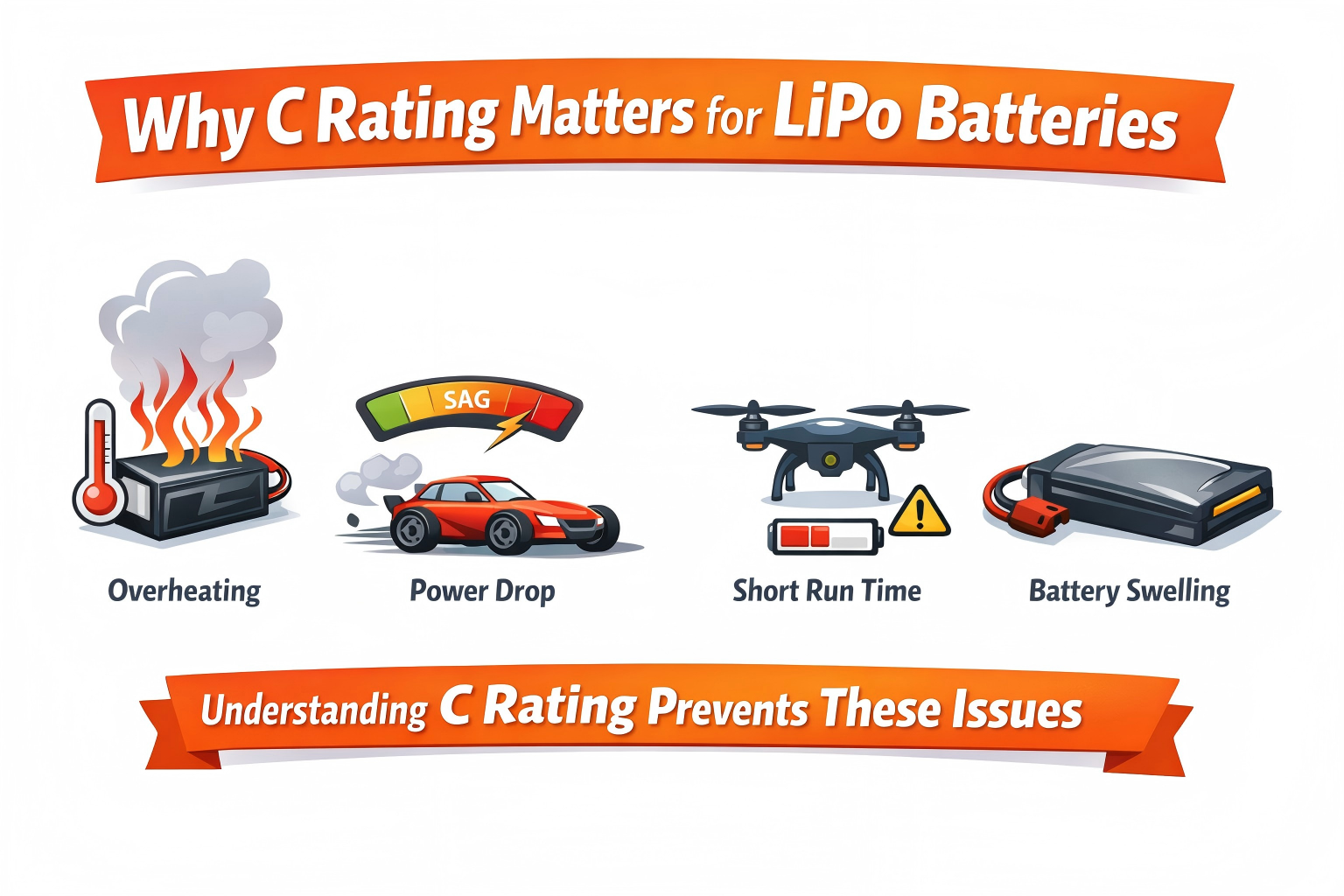 Current Demand
Relate the 100mΩ listing to actual peak loads and the charger/power-path design.
Read the current demand guide →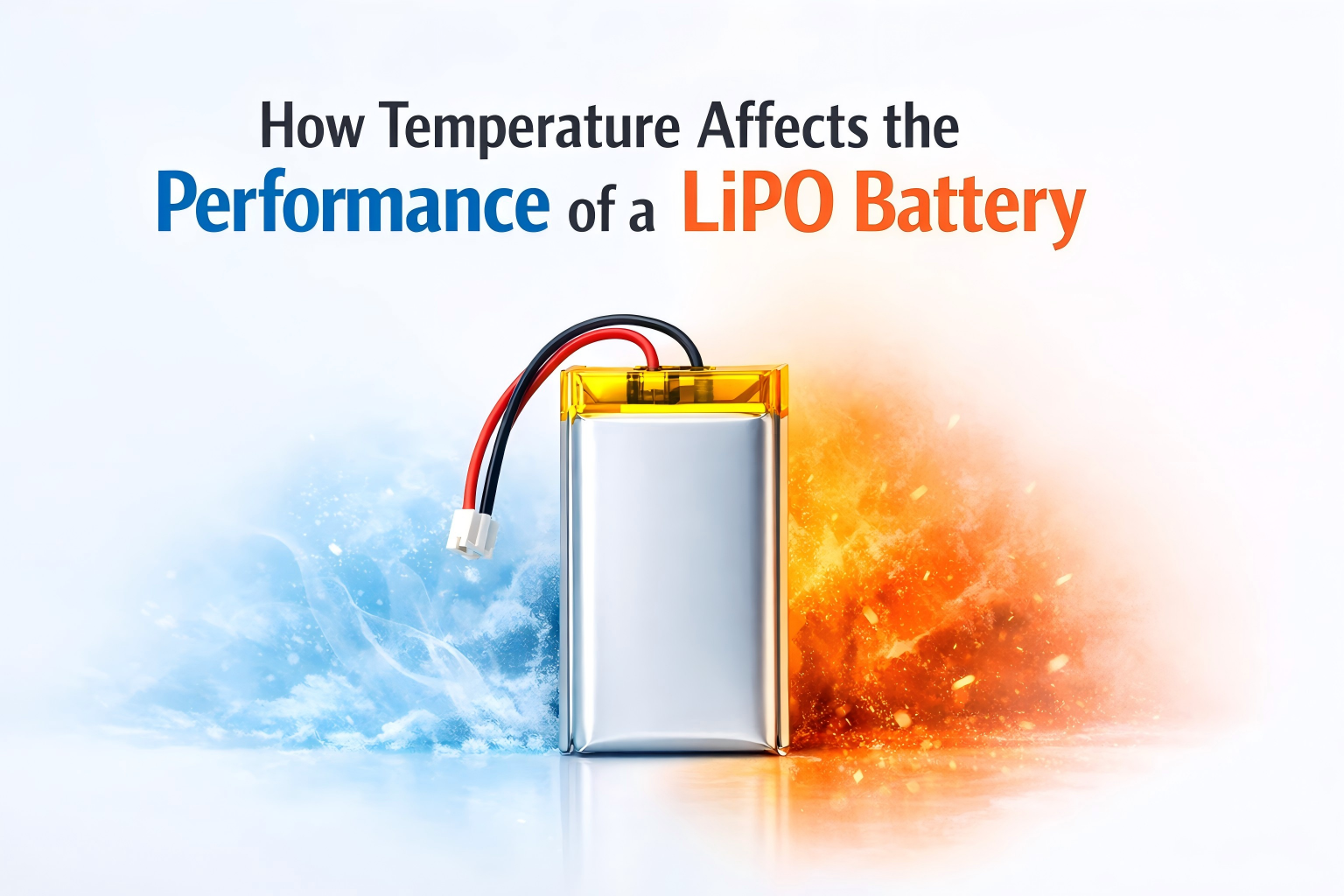 Operating Conditions
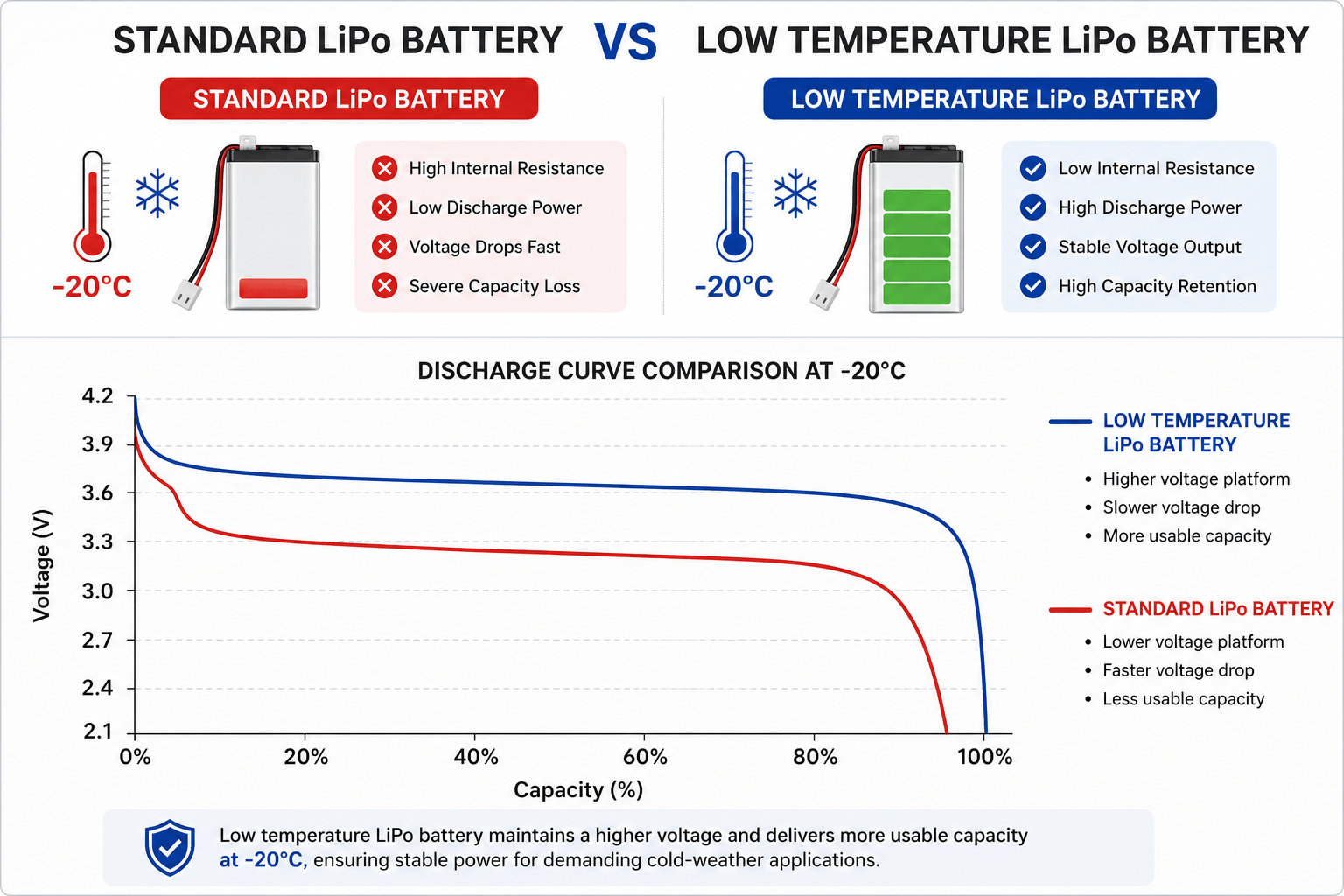
Review thermal and charging conditions for a thinner pouch inside a compact product.
Read the operating conditions guide →OEM Battery Support
Share whether the device favors 5.8mm depth and a 30mm channel or a shorter deeper pocket so ZERNE can compare the 582030 and 841625 configurations against the real housing.
The most useful RFQ makes the 300mAh same-capacity comparison explicit and includes the available plan area and depth.
ZERNE can review the deeper 841625 format, a lower-capacity same-plan-area option or a custom thickness and connector arrangement for the final device.
Discuss a Custom BatteryFAQ
Find answers about the 582030 3.7 V 300mAh lithium polymer battery, including its thin format, same-capacity comparison, calculated energy and resistance reference.
The 582030 reference is specified as 5.8mm × 20mm × 30mm in thickness × width × length order. Allow additional room for cushioning, retention, leads, connector and protection.
The rated capacity is 300mAh at a nominal voltage of 3.7 V. The calculated energy is approximately 1.11Wh before cutoff, load, temperature, resistance, protection and system losses.
Using the 3.7 V LiPo family weight reference, the 300mAh configuration is approximately 6g. Finished weight depends on leads, connector, protection and assembly details.
The calculated current references are approximately 150mA standard charge, 300mA rapid charge, 60mA standard discharge and 300mA maximum discharge. Confirm the final safe limits for the completed battery.
Both references are 300mAh at 3.7 V. The 582030 is 5.8mm × 20mm × 30mm, while 841625 is 8.4mm × 16mm × 25mm, so they represent different pocket priorities.
The 100mΩ listing helps frame early voltage-drop questions. Final behavior depends on peak load, wires, connector, protection and temperature in the complete battery assembly.
Technical Inquiry
Share the available depth and plan area, target load profile and operating interval so the two 300mAh paths can be reviewed against the finished product.