
5.00Wh Calculated Energy for a Balanced 1350mAh Design
The 3.7V nominal platform and 1350mAh rated capacity provide approximately 5.00Wh before system losses and application-specific derating.
3.7V Lithium Polymer Battery · 1000–2000mAh Range
The 902551 LiPo battery provides a 3.7V platform, 1350mAh rated capacity and a 9.0mm × 25mm × 51mm pouch format. It gives OEM teams a balanced mid-capacity reference when the device can accept moderate depth but needs to control battery width and length.
Product snapshot
The 902551 is a same-capacity comparison point for 103542, with a narrower 25mm width and a slightly longer 51mm footprint. A 1350mAh same-capacity comparison point that trades a little more width for a shorter 51mm length.
The 3.7V nominal platform and 1350mAh rated capacity provide approximately 5.00Wh before system losses and application-specific derating.
The 9.0mm × 25mm × 51mm envelope can help teams compare a narrower battery pocket with nearby 1350mAh formats.
Current, energy and weight values are calculated references for early planning. Confirm final limits and the finished battery configuration with ZERNE.
Technical data
These specifications summarize the 902551 reference format. A 1350mAh same-capacity comparison point that trades a little more width for a shorter 51mm length. Confirm final construction, protection, connector and validation conditions for the finished OEM battery configuration.
| 902551 Mechanical and Electrical Specifications | |
|---|---|
| Product number | 902551 |
| Nominal voltage | 3.7V |
| Rated capacity | 1350mAh |
| Confirmed C-rate | 1C |
| Battery dimension | 9.0mm × 25mm × 51mm |
| Listed internal resistance | 60mΩ |
| Calculated Electrical References | |
| Standard charge current | Approx. 675mA |
| Rapid charge current | Approx. 1350mA |
| Standard discharge current | Approx. 270mA |
| Maximum discharge current | Approx. 1350mA |
| Calculated energy | Approx. 5.00Wh |
The direct 902551 values are used as the model reference. Current, energy and weight figures are calculated references rather than measured production results. Confirm the final charging profile, discharge demand, protection configuration, connector, tolerances and validation conditions with ZERNE for the finished device.
Product characteristics & advantages
The 902551 is a same-capacity comparison point for 103542, with a narrower 25mm width and a slightly longer 51mm footprint. A 1350mAh same-capacity comparison point that trades a little more width for a shorter 51mm length. The geometry and energy-planning tradeoff are the primary selection focus for this reference model.
The 902551 focuses on a specific geometry tradeoff: 1350mAh capacity in a 25mm-wide, 51mm-long pouch. It can help OEM teams choose between width, length and depth before a custom design review.
The rated capacity provides a clear basis for comparing runtime and standby requirements with other 1350mAh references.
The footprint can suit layouts where a broader 35mm battery area is not available.
Review the 9.0mm thickness with cushioning, tolerances and nearby components.
The listed resistance can support initial voltage-drop discussions, subject to validation under the finished load profile.
Battery calculation
Use the prefilled 902551 values or enter your own load assumptions for a quick energy and runtime estimate.
Energy is calculated from nominal voltage and capacity. Runtime uses the entered load power and an adjustable efficiency assumption.
Runtime is an estimate, not guaranteed product performance.
The 902551 values are prefilled: 3.7V and 1350mAh. Adjust the load power and efficiency to compare different operating scenarios.
Use the result as an initial estimate, then discuss charger validation and the final battery specification with ZERNE.
Integration guidance
Reserve the stated battery pocket, allow for the 9.0mm thickness, review cable and connector access, and validate the charger, protection and finished load profile before production. Use the 25mm width and 51mm length to test placement beside the PCB. Review 9.0mm thickness and 60mΩ resistance with retention, peak load and temperature.
Allow space for the pouch cell, enclosure walls, cushioning, retention features, cable exit and service access around the listed footprint.
Review compression risk, enclosure tolerances and adjacent components around the battery before finalizing the mechanical design.
Use the calculated 675mA standard-charge, 1350mA rapid-charge, 270mA standard-discharge and 1350mA maximum-discharge references for early review, then validate the finished battery assembly.
Applications & solution paths
The 902551 format can be considered for products that match its 9.0mm × 25mm × 51mm envelope and 1350mAh energy target. A useful comparison for handheld and monitoring products that need 1350mAh-class capacity but cannot extend much beyond 51mm. Final suitability depends on device load, runtime, enclosure, charging and connector requirements.
 01
The 9.0 mm × 25 mm × 51 mm pouch can be compared with smartwatch housing space, display layout, comfort and cable routing before finalizing the battery.
View Smart Watches solutions → 02
The 1350 mAh and calculated energy reference can support early runtime comparisons in portable ECG equipment; confirm load profile, protection and documentation needs.
View Portable ECG Monitors solutions → 03
The reference can support early review of connected air-purifier layouts where the battery pocket, airflow path and service access must be balanced.
View Air Purifiers solutions → 04
The 9.0 mm × 25 mm × 51 mm plan area can be assessed in a POS terminal where display, scanner, controls and enclosure clearance influence the battery pocket.
View POS Machines solutions →Related technical articles
Use these resources to review the energy, geometry, current and safety questions most relevant to a 9.0mm × 25mm × 51mm pouch battery.
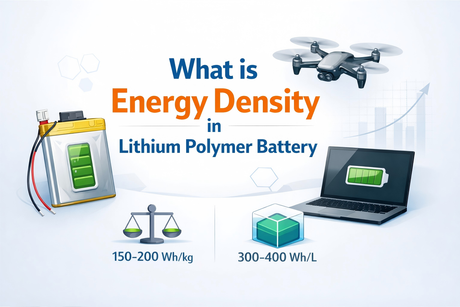 Energy Density
Review how watt-hours, capacity and physical volume work together when the battery must fit a defined enclosure.
Read the technical guide → Runtime
Translate the capacity reference into a realistic runtime discussion using the actual device load and cutoff.
Read the technical guide → Safety
Review charging, handling, storage and protection considerations before integrating a lithium polymer battery.
Read the technical guide →OEM battery support
A complete inquiry can include the required runtime, device load, 9.0mm × 25mm × 51mm battery pocket, charger, connector and documentation needed to evaluate this 1350mAh reference format. Share maximum length, width, depth and peak-current profile, especially when choosing between same-capacity geometries.
Share the product conditions that determine how the 902551 format will fit and perform in the finished device, especially its battery pocket, load and charging window.
ZERNE can discuss alternate capacity, geometry, protection, connector and assembly requirements when the 902551 specification does not match the finished product.
Discuss a Custom BatteryFAQ
Find answers about the 902551 3.7V 1350mAh lithium polymer battery, including its dimensions, calculated energy, current references and OEM integration considerations.
The 902551 battery measures 9.0mm in thickness, 25mm in width and 51mm in length.
The listed rated capacity is 1350mAh at a nominal voltage of 3.7V. The calculated energy is approximately 5.00Wh before system losses.
The calculated references are approximately 675mA for standard charging, 1350mA for rapid charging, 270mA for standard discharge and 1350mA for maximum discharge. Confirm the final production limits and test conditions with ZERNE.
The calculated weight reference is approximately 27g. Final weight can vary with the completed battery configuration and should be confirmed during sampling.
The supplied reference lists internal resistance of 60mΩ. Actual system behavior should be checked under the finished load, temperature and assembly conditions.
A 1350mAh same-capacity comparison point that trades a little more width for a shorter 51mm length. Confirm the usable pocket and calculated electrical references before requesting samples.
The 902551 provides a 1350mAh-class capacity in a 9.0mm × 25mm × 51mm pouch envelope, giving OEM teams a concrete starting point for product-space and energy planning.
The 902551 is a reference model. ZERNE can discuss alternate capacity, dimensions, protection, connector and wiring requirements when the listed format does not match the finished product.
Review the stated battery area, 9.0mm depth, load profile, charging conditions, protection design, connector, cable exit and enclosure retention with ZERNE.
Lithium polymer battery inquiry
Share the application, runtime target, load profile, 9.0mm × 25mm × 51mm battery area, charging conditions and annual demand so ZERNE can recommend the right sample and validation path. Share maximum length, width, depth and peak-current profile, especially when choosing between same-capacity geometries.